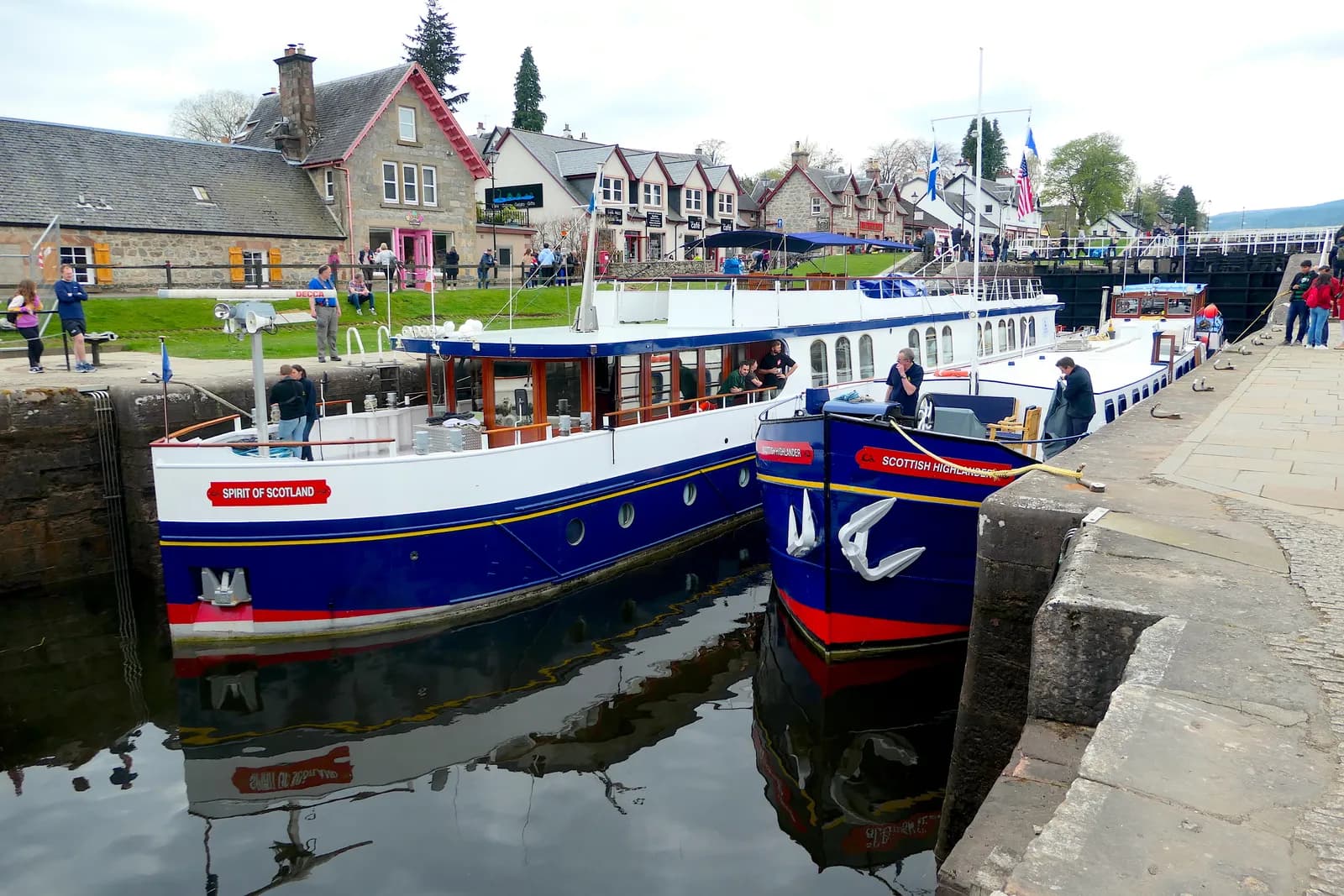
The Caledonian Canal transformed Inverness from a river port into a trans-Scotland maritime hub. Thomas Telford's early 19th-century engineering achievement created a navigable route connecting the east and west coasts of Scotland, with Inverness as its vital north-eastern gateway.
Parliamentary Approval and Construction
The Caledonian Canal Act received royal assent on 27 July 1803, granting initial funding of £20,000. A second act passed in 1804 provided £50,000 per year in government support. Construction began later that same year under Telford's direction as principal engineer.
Telford initially estimated the project would require seven years and £350,000. Both predictions proved inadequate; the canal took twenty years to complete and opened in October 1822. Telford worked alongside consulting engineer William Jessop until Jessop's death in 1814. Two resident engineers managed the construction: Matthew Davidson oversaw works at Clachnaharry near Inverness, while John Telford managed the Corpach end near Fort William.
Engineering Specifications
The canal stretches 60 miles (100 km) from Inverness to Corpach near Fort William. Only one-third of the route required excavation; the remainder follows the natural course of the Great Glen, utilising Loch Dochfour, Loch Ness, Loch Oich, and Loch Lochy.
The system comprises 29 locks in total, including eight at Neptune's Staircase near Banavie, five at Fort Augustus, four at Muirtown in Inverness, and others at Laggan and Corpach. Four aqueducts carry the canal over Highland rivers: the Loy Aqueduct measures 260 feet (79 metres), while the Muirshearlich Aqueduct near Torcastle spans 240 feet (73 metres). Ten bridges cross the waterway.
Boats navigating the canal must not exceed 45.72 metres in length, 10.67 metres in beam, 4.1 metres in draft, and 35 metres in air draft. The summit at Loch Oich sits 106 feet (32.3 metres) above sea level.
Inverness: The Maritime Gateway
Clachnaharry Sea Lock marks the canal's north-eastern terminus. Built at the end of a man-made peninsula, the sea lock ensures deep water access to the Beauly Firth. Adjacent to it, a swing bridge carries the Far North Line across the canal. The current steel structure, 123 feet (37.5 metres) long, replaced the original 1862 wrought iron version in 1909 and holds Category B listed status.
Next to the sea lock, the Clachnaharry Works Lock houses smiddy and workshops dating from 1810, extended between 1840 and 1850. The building retains two original forging hearths.
Muirtown Basin provides moorings at the eastern end of the canal. Vessels make a right-angled turn beneath the A862 swing bridge to reach the flight of four Muirtown Locks. Beyond these locks, the canal continues south to the Tomnahurich swing bridge on the A82, where a 1938 steel structure replaced the original timber crossing.
Dochgarroch Lock, located further upstream, protects the canal from River Ness flooding. Its two-storey lock keeper's cottage dates from the 1850s.
Heritage Recognition
Significant sections of the canal near Inverness hold Scheduled Monument status. The stretch from Muirtown Locks to Dochgarroch Lock is protected, as is Dochgarroch Lock individually. The section from Muirtown Locks to Loch Dochfour also falls under statutory protection, including the River Ness weir and the west bank of Loch Dochfour.
This designation reflects the national significance of these industrial heritage structures within the city.
Wartime Service
During the First World War, Muirtown Basin served as US Naval Base 18. The facility formed the final stage in constructing anti-submarine mines for the North Sea Mine Barrage, a 230-mile minefield stretching between Orkney and Norway. The base contributed at least 70,000 mines to the effort.
The canal also provided a vital shortcut for fishing vessels travelling between Scotland's east and west coasts, allowing them to avoid U-boat patrols in the Pentland Firth and around Cape Wrath.
Modern Operations and Tourism
Scottish Canals operates the waterway, having assumed this responsibility when British Waterways in Scotland adopted the trading name in 2012. The organisation became a non-departmental public body in 2020/21.
The canal remains open for leisure and tourism. Neptune's Staircase, Britain's longest staircase lock, now takes approximately 90 minutes to transit following mechanisation completed in 1969. The original manual operation required half a day.
Major repair works between 1995 and 2005 addressed deterioration in the lock walls, involving 16,000 drilled holes and 25,000 tons of grout.
Today the canal supports the Highland economy through boat tours, the Great Glen Canoe Trail, and walking and cycling paths along the towpaths. The waterway attracts vessels from across Europe, with Inverness serving as the primary entry point for those navigating the full route to Fort William.