During the final year of the First World War, a secret American naval facility at Muirtown Basin in Inverness assembled tens of thousands of anti-submarine mines for the North Sea Mine Barrage. Designated US Naval Base 18, the installation was a critical link in the largest mine-laying operation ever undertaken.
The North Sea Mine Barrage
In the summer of 1918, the United States Navy laid a vast minefield across the North Sea to block German U-boat routes between Scotland and Norway. The barrage stretched roughly 230 miles from the Orkney Islands to Norway and covered an area approximately 25 miles wide. In total, 70,177 mines were deployed, of which the US Navy laid 56,571. The operation was intended to inhibit the movement of enemy submarines and protect Allied shipping lanes.
US Naval Base 18 at Muirtown Basin
To support this enormous undertaking, the US Navy established Naval Base 18 at Muirtown Basin on the Caledonian Canal in the west end of Inverness. The facility served as a final assembly point for anti-submarine mines before they were shipped to the North Sea. Its location on the canal provided a direct water route for moving assembled munitions onto naval vessels. The base operated during a period of intense wartime secrecy, and its existence left little permanent trace on the landscape.
Assembly and Logistics
Mine components arriving from the United States were transported by barge along the Caledonian Canal to Inverness. At Muirtown Basin, US Navy personnel assembled the mines before they were loaded onto ships. The Admiralty loaned a locomotive, the 'Terrier' No.38 "Millwall", to marshal the rail yard at the base; temporary sidings were laid over a field behind what is now Merkinch Primary School. These rail connections allowed the movement of heavy materiel between the canal and the assembly area.
Local Impact and Legacy
The presence of Naval Base 18 brought significant industrial and military activity to Inverness during the final months of the war. The temporary nature of the infrastructure, including the rail sidings, indicates the facility was designed for rapid establishment and eventual dismantling. After the armistice, the locomotive "Millwall" was sold to the Glen Albyn distillery rather than returned to the Admiralty. The Caledonian Canal itself had proved invaluable during the conflict as a safe inland waterway for fishing vessels avoiding U-boat patrols in the Pentland Firth.
What Remains Today
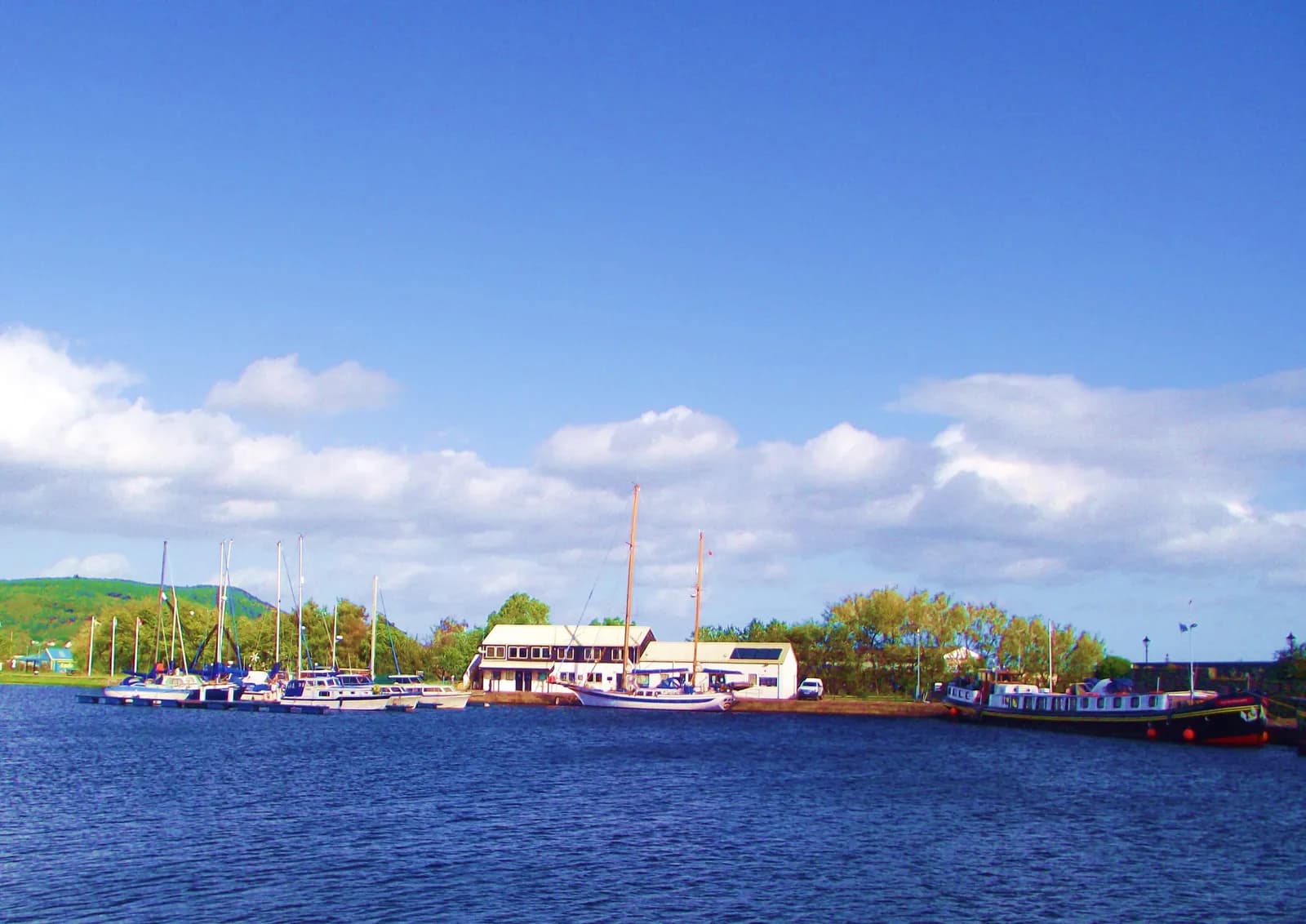
Muirtown Basin now serves as a marina on the Caledonian Canal, approximately 1.5 kilometres northwest of Inverness city centre. The whisky distilleries that once stood nearby, some of which were requisitioned for wartime use, have since disappeared. The basin is flanked by modern housing and leisure facilities, and few physical reminders of its role in the 1918 mine barrage remain visible. A walk along the canal towpath from Muirtown Basin to Clachnaharry Sea Lock follows the same route once used by American servicemen and local workers a century ago.